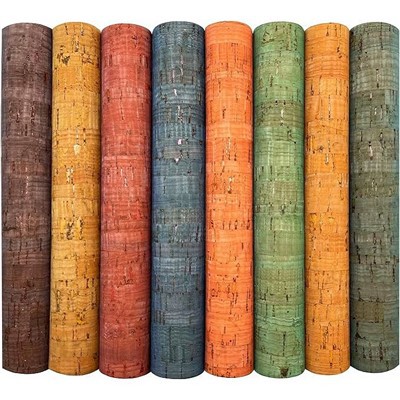
As a supplier of natural cork fabric, I've witnessed a growing interest in this unique material. One of the most frequently asked questions from potential clients is about how natural cork fabric responds to heat. In this blog post, I'll delve into the science behind cork's heat resistance and its implications for various applications.
The Composition of Natural Cork Fabric
Natural cork fabric is derived from the bark of the cork oak tree (Quercus suber). The cork oak is native to the western Mediterranean region, and its bark can be harvested every 9 to 12 years without harming the tree. This sustainable harvesting process makes cork an environmentally friendly material.
The cellular structure of cork is what gives it its remarkable properties. Under a microscope, cork cells appear as tiny, hexagonal prisms filled with air. These cells are surrounded by a waxy substance called suberin, which is highly impermeable to water, gases, and liquids. The combination of the air-filled cells and suberin gives cork its lightweight, buoyant, and insulating qualities.
Heat Resistance of Natural Cork Fabric
The heat resistance of natural cork fabric is primarily due to its low thermal conductivity. Thermal conductivity is a measure of how well a material conducts heat. Materials with low thermal conductivity, such as cork, are good insulators because they slow down the transfer of heat.
The air-filled cells in cork act as natural insulators, trapping heat and preventing it from passing through the material quickly. Suberin also plays a role in heat resistance by providing a barrier against heat transfer. Additionally, cork has a high ignition point, which means it is less likely to catch fire compared to other materials.
How Natural Cork Fabric Responds to Different Temperatures
Low Temperatures
At low temperatures, natural cork fabric retains its flexibility and durability. The air-filled cells in cork act as a buffer, preventing the material from becoming brittle or cracking. This makes cork fabric suitable for use in cold environments, such as winter clothing or outdoor gear.
High Temperatures
When exposed to high temperatures, natural cork fabric begins to show some changes. At temperatures below 100°C (212°F), cork remains stable and retains its physical properties. However, as the temperature approaches 200°C (392°F), the suberin in cork starts to break down, and the material may begin to char.
It's important to note that the heat resistance of cork fabric can vary depending on factors such as the thickness of the material, the quality of the cork, and the presence of any coatings or treatments. In general, thicker cork fabrics tend to have better heat resistance than thinner ones.
Applications of Natural Cork Fabric Based on Heat Resistance
Insulation
One of the most common applications of natural cork fabric is in insulation. Due to its low thermal conductivity, cork fabric is used in a variety of insulation products, such as building insulation, pipe insulation, and thermal clothing. In building insulation, cork fabric can help reduce heat loss in the winter and heat gain in the summer, leading to energy savings and a more comfortable indoor environment.
Protective Gear
The heat resistance of natural cork fabric makes it suitable for use in protective gear, such as gloves, aprons, and heat shields. In industrial settings, workers who are exposed to high temperatures or flames can benefit from wearing cork fabric protective gear, which provides a barrier against heat and reduces the risk of burns.
Home Decor
Cork fabric is also used in home decor applications, such as wall coverings, furniture upholstery, and table runners. The heat resistance of cork fabric makes it a safe and practical choice for these applications, especially in areas where there is a risk of heat exposure, such as near fireplaces or stoves.
Comparing Natural Cork Fabric with Other Materials
When considering the heat resistance of natural cork fabric, it's helpful to compare it with other materials commonly used in similar applications.
Leather
Leather is a popular material for clothing, accessories, and upholstery. While leather has some heat resistance, it is generally less heat-resistant than natural cork fabric. Leather can become dry and brittle when exposed to high temperatures, and it may also shrink or lose its shape.
Synthetic Fabrics
Synthetic fabrics, such as polyester and nylon, are often used in clothing and other applications due to their durability and affordability. However, many synthetic fabrics have poor heat resistance and can melt or catch fire when exposed to high temperatures. Natural cork fabric, on the other hand, is more resistant to heat and is less likely to pose a fire hazard.
Conclusion
In conclusion, natural cork fabric is a versatile and sustainable material with excellent heat resistance properties. Its low thermal conductivity, high ignition point, and ability to retain its flexibility at low temperatures make it suitable for a wide range of applications, from insulation to protective gear and home decor.
If you're interested in using natural cork fabric in your products, I encourage you to explore the possibilities. As a supplier of high-quality natural cork fabric, I can provide you with the materials you need and offer guidance on the best applications for your specific requirements.


If you're also looking for other types of leather materials, we have a variety of options available. You can check out our Buy Waxed Pu Leather Water-based PU Leather Artificial Leather Pu Texture for Footwear Bags Home Furnishings Automotive Interiors Accessories Electronic Device Covers, Metallic PU Leather Manufactures for Bags Shinny Leather Woven Pattern Leather for Evening Bags and Wallet, and Fashion Synthetic Leather in Stock Metallic Faux Leather Waterproof PU Eco-friendly PU Leather for Bags Footwear Accessories Interior Decoration Car Interior.
If you have any questions or would like to discuss your procurement needs, please feel free to reach out. We're here to help you find the perfect materials for your projects.
References
- Almeida, A., & Pereira, H. (2009). Cork: properties, uses and potentialities. In Wood and Natural Fibre Composites (pp. 329-346). Springer.
- Pinto, N., & Pereira, H. (2010). The effect of temperature on the mechanical properties of cork. Journal of Materials Science, 45(11), 2987-2993.
- Rocha, H., & Pereira, H. (2009). Cork as an insulation material. Building and Environment, 44(8), 1647-1654.