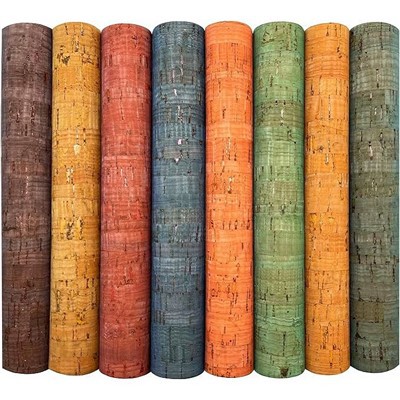
Is printed cork fabric stretchy? This is a question that often pops up when people are exploring the unique properties of printed cork fabric. As a supplier of printed cork fabric, I'm excited to delve into this topic and share some in - depth insights with you.
Understanding Printed Cork Fabric
Printed cork fabric is a remarkable material that combines the natural beauty and functionality of cork with the versatility of printing. Cork is harvested from the bark of cork oak trees (Quercus suber). The harvesting process is sustainable as it doesn't harm the tree, and the bark regenerates over time. Once the cork is harvested, it goes through a series of processing steps to transform it into a fabric - like material. Printing on cork fabric allows for a wide range of designs, from simple patterns to complex graphics, making it suitable for various applications.
The Printed Cork Fabric China Manufacture Cork Leather Supplier for Footwear Handbags Hat Laptop Automotive Interiors Furniture offers a diverse selection of printed cork fabrics, catering to different industries and design needs.
The Natural Properties of Cork
Before discussing stretchiness, let's understand the basic properties of cork. Cork is composed of millions of tiny air - filled cells. These cells give cork its unique characteristics, such as being lightweight, buoyant, and having excellent insulation properties. Cork is also resistant to water, fire, and rot, which makes it a durable material for many applications.
However, in its natural form, cork is not known for its stretchiness. The cell structure of cork is relatively rigid, and the material has a certain degree of stiffness. When you try to stretch a piece of raw cork, you'll find that it has very limited elasticity. It may bend or flex to some extent, but it won't stretch like a rubber band or a stretchy textile.
Stretchability of Printed Cork Fabric
The stretchability of printed cork fabric depends on several factors. First, the base material used in the production of the cork fabric plays a crucial role. Some printed cork fabrics are made by laminating cork onto a backing material. The type of backing material can significantly affect the stretchability of the final product.
For example, if the backing material is a stretchy textile like spandex or a stretch - woven fabric, the printed cork fabric will have some degree of stretch. The stretch of the backing material allows the cork fabric to expand and contract to a certain extent. This type of stretchy printed cork fabric is often used in applications where flexibility and movement are required, such as in the production of footwear or clothing accessories.
On the other hand, if the backing material is a non - stretchy material like a rigid paper or a non - stretch woven fabric, the printed cork fabric will have limited stretchability. It may only have a small amount of flexibility but won't stretch significantly. This type of non - stretchy printed cork fabric is more suitable for applications where a stable and non - stretchy surface is needed, such as in the manufacture of handbags, laptop cases, or furniture upholstery.
Another factor that affects stretchability is the thickness of the cork layer. Thicker cork layers tend to be less stretchy than thinner ones. A thick cork layer has more rigid cell structure, which restricts its ability to stretch. In contrast, a thinner cork layer can be more flexible and may have a slightly higher degree of stretch, especially when combined with a stretchy backing material.
Testing the Stretchability of Printed Cork Fabric
As a supplier, we often conduct tests to determine the stretchability of our printed cork fabrics. We use a simple tensile testing method to measure how much a sample of the fabric can stretch before it reaches its breaking point.
During the test, we take a rectangular sample of the printed cork fabric and clamp it at both ends. Then, we gradually apply a pulling force to the sample using a testing machine. We measure the amount of stretch in the fabric as the force is increased. The results of these tests help us classify our printed cork fabrics into different stretch categories, which we can then communicate to our customers.

We also consider the recovery rate of the fabric after stretching. A good quality stretchy printed cork fabric should be able to return to its original shape after being stretched. If the fabric remains stretched or deformed after the force is removed, it may not be suitable for applications where shape retention is important.
Applications of Stretchy and Non - Stretchy Printed Cork Fabric
Stretchy printed cork fabric has a wide range of applications. In the fashion industry, it can be used to make unique clothing items such as skirts, tops, or even swimwear. The stretchiness allows the fabric to conform to the body's movements, providing a comfortable fit. It can also be used in the production of fashion accessories like belts and headbands.
In the sports equipment industry, stretchy printed cork fabric can be used to make grips for sports tools. The stretchability ensures a secure fit on the handle, and the cork provides a non - slip surface.
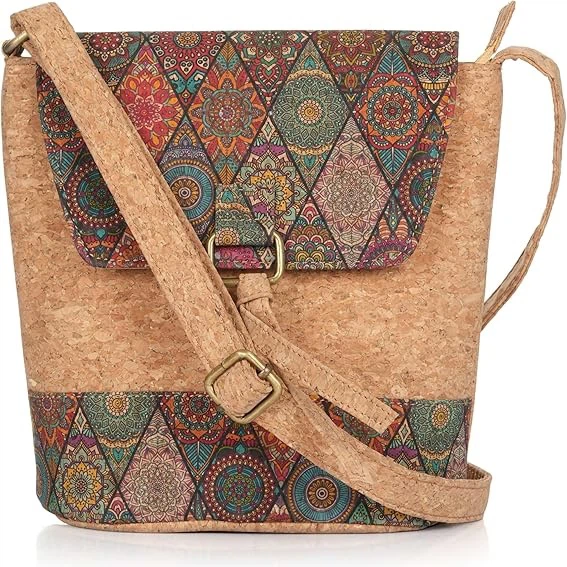
Non - stretchy printed cork fabric, on the other hand, is more commonly used in applications where stability and a flat surface are required. It is ideal for making handbags, wallets, and briefcases. The non - stretchy nature of the fabric helps maintain the shape of these products and provides a professional and elegant appearance. It is also used in interior design, such as for upholstering furniture or covering walls.
Quality and Durability of Printed Cork Fabric
Regardless of its stretchability, the quality and durability of printed cork fabric are important considerations. When choosing a printed cork fabric, you should look for a product that has a high - quality print. The print should be clear, sharp, and resistant to fading. The lamination process between the cork and the backing material should also be strong to ensure that the two layers do not separate over time.
A durable printed cork fabric will maintain its properties even after repeated use and exposure to different environmental conditions. It should resist wear and tear, and the cork layer should not peel or crack easily. As a supplier, we ensure that our printed cork fabrics meet high - quality standards through strict quality control measures during the production process.
Conclusion
In conclusion, the stretchability of printed cork fabric varies depending on the backing material, the thickness of the cork layer, and other factors. While natural cork is not stretchy, printed cork fabrics can be made stretchy by using appropriate backing materials. Stretchy printed cork fabric is suitable for applications that require flexibility and movement, while non - stretchy printed cork fabric is better for applications where stability and a flat surface are needed.
If you're interested in using printed cork fabric for your projects, whether it's for fashion, interior design, or other industries, I encourage you to explore our range of products. We offer a variety of printed cork fabrics with different stretch properties to meet your specific needs. Contact us to discuss your requirements and start a procurement negotiation. We're here to provide you with the best - quality printed cork fabric solutions.
References
- “Cork: Properties, Production, and Uses” by José Miguel Pereira
- Research papers on cork material science from academic journals in the field of materials engineering.