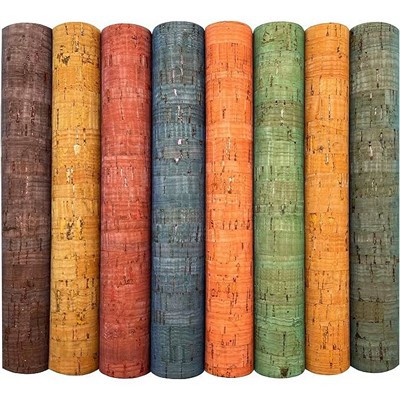
When it comes to sound - insulating materials, the market is flooded with a wide array of options, each with its own set of characteristics, benefits, and drawbacks. As a passionate cork fabric supplier, I've witnessed firsthand the growing interest in cork fabric as a sound - insulating solution. In this blog post, I'll delve into how cork fabric stacks up against other commonly used sound - insulating materials.
Understanding Sound Insulation
Before comparing materials, it's essential to understand what sound insulation is. Sound insulation involves reducing the transmission of sound waves from one area to another. This can be achieved through absorption, where sound energy is converted into heat, or by blocking the sound waves' path. The effectiveness of a sound - insulating material is often measured by its Sound Transmission Class (STC) rating in North America or its Rw rating in Europe.
Common Sound - Insulating Materials
Let's first take a look at some popular sound - insulating materials that have been in use for a long time:
Mineral Wool
Mineral wool, including fiberglass and rock wool, is one of the most widely used sound - insulating materials. Fiberglass is made from recycled glass and sand, while rock wool is produced from basalt or diabase rocks. These materials are known for their high sound - absorption coefficients. They work well by trapping sound waves within their fibrous structure, converting the sound energy into heat. Mineral wool is also relatively inexpensive, readily available, and can be installed in various applications, such as walls, ceilings, and floors. However, it has some drawbacks. Fiberglass can be irritating to the skin, eyes, and respiratory system during installation. Also, over time, it can settle, reducing its sound - insulating effectiveness.
Foam Insulation
Foam insulation, such as polyurethane foam and polystyrene foam, is another common option. Spray - foam insulation can fill gaps and crevices effectively, creating an air - tight seal that helps in reducing sound transmission. Rigid foam boards are also used for insulation purposes. Foam insulation has good thermal and sound - insulating properties. It can conform to irregular shapes, making it suitable for complex installations. But foam insulation can be flammable, and some types may release harmful chemicals during installation or over time, especially if they are not properly insulated.
Mass - Loaded Vinyl (MLV)
MLV is a heavy, flexible material that is used to block sound waves. It is often made with a combination of vinyl and a dense filler material. MLV is very effective at reducing airborne noise. It can be installed on walls, ceilings, and floors, and is commonly used in home theaters, recording studios, and industrial settings. However, it can be quite heavy, which may limit its use in some applications. It also lacks sound - absorption properties, so it is often used in combination with other sound - absorbing materials.
Introducing Cork Fabric
Cork fabric is a unique and sustainable sound - insulating material that is gaining popularity. It is made from the bark of the cork oak tree, which is harvested without harming the tree. The bark regenerates every 9 - 12 years, making cork an environmentally friendly choice. China Cork Leather Supplier Hot Sale Cork Fabric Made in China for Footwear Handbags Hat Automotive Interiors Furniture offers a variety of cork fabric options that can be used for different applications.


Sound - Insulating Properties of Cork Fabric
Cork fabric has excellent sound - insulating properties due to its cellular structure. The cork cells are filled with air, which acts as a natural insulator. When sound waves hit the cork fabric, they are absorbed and scattered within the cellular structure, reducing the amount of sound that passes through. Cork fabric can also help in reducing impact noise, such as footsteps on a floor. This is because it can dampen the vibrations caused by impact, preventing them from being transmitted as sound.
Advantages of Cork Fabric over Other Materials
- Sustainability: As mentioned earlier, cork is a renewable resource. The harvesting process is environmentally friendly, and the cork oak forests play an important role in carbon sequestration. In contrast, many other sound - insulating materials are made from non - renewable resources or have a high environmental impact during production.
- Safety: Cork fabric is non - toxic and does not release harmful chemicals. It is also fire - resistant, which makes it a safe choice for various applications. Unlike some foam insulations and fiberglass, it does not cause skin irritation or respiratory problems during installation.
- Aesthetics and Versatility: Cork fabric has a unique and natural appearance that can enhance the aesthetics of a space. It can be used in a variety of applications, including interior design, automotive interiors, footwear, and handbags. China Cork Leather Manufacture Hot Sale Cork Fabric for Footwear Handbags Automotive Interiors Furniture showcases the versatility of cork fabric in different industries.
- Durability: Cork fabric is resistant to wear and tear, mold, and mildew. It can maintain its sound - insulating properties over time, unlike some materials that may degrade or settle.
Limitations of Cork Fabric
While cork fabric has many advantages, it also has some limitations. It may not have as high an STC or Rw rating as some specialized sound - insulating materials in extreme noise - reduction scenarios. For example, in a large industrial facility with very high - level noise, cork fabric alone may not be sufficient to meet the required sound - insulation standards. However, it can still be used in combination with other materials to enhance the overall sound - insulation performance.
Applications of Cork Fabric in Sound Insulation
Cork fabric can be used in various applications for sound insulation:
- Residential Buildings: In homes, cork fabric can be used on walls, ceilings, and floors to reduce noise from neighbors, traffic, or household appliances. It can also be used in bedrooms and home offices to create a quiet environment.
- Automotive Industry: In cars, cork fabric can be used in the interior to reduce road noise and engine noise. It can also be used in the manufacturing of automotive interior components such as dashboards and door panels. Natural Cork Material Manufacture Cork Leather Factory Color Slub Pattern Cork Fabric for Bags Shoes Wallpaper offers cork fabric options suitable for automotive applications.
- Commercial Spaces: In offices, restaurants, and hotels, cork fabric can be used to improve the acoustics of the space, reducing background noise and creating a more comfortable environment for employees and customers.
Conclusion
In conclusion, cork fabric offers a unique combination of sound - insulating properties, sustainability, safety, and versatility. While it may not be the best option for every sound - insulation scenario, it has many advantages over other commonly used materials. Whether you are looking to improve the acoustics of your home, create a quiet automotive interior, or enhance the sound - quality of a commercial space, cork fabric is definitely worth considering.
If you're interested in exploring the potential of cork fabric for your sound - insulation needs, I encourage you to reach out. Our team of experts is ready to discuss your specific requirements and provide you with the best cork fabric solutions. Start the conversation today and discover how cork fabric can transform your space.
References
- "Sound Insulation Materials: A Comprehensive Guide" by Building Science Press
- "The Properties and Applications of Cork" by Cork Research Institute