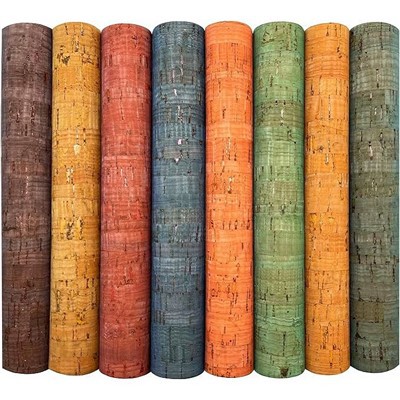
As a supplier of printed cork fabric, one question I'm frequently asked is whether our product has a smell. This is a valid concern for many customers, especially those who are using the fabric for applications like footwear, handbags, hats, laptop cases, automotive interiors, and furniture, where odor can significantly impact the user experience. In this blog post, I'll delve into the science behind cork fabric, explain why it might have a smell, and discuss how we at [Our Company] address this issue.
The Nature of Cork
Cork is a natural material harvested from the bark of the cork oak tree (Quercus suber). This unique tree species is primarily found in the Mediterranean region, particularly in Portugal, which is the world's largest producer of cork. The harvesting process is sustainable and environmentally friendly, as the bark can be stripped from the tree every 9-12 years without harming it.
Cork has several remarkable properties that make it an ideal material for a wide range of applications. It is lightweight, buoyant, elastic, and resistant to water, fire, and rot. Additionally, cork has excellent insulation properties, both thermal and acoustic, making it a popular choice for construction and automotive industries.
Why Cork Might Have a Smell
Like any natural material, cork can have a distinct odor. The smell of cork is primarily due to the presence of various organic compounds, such as tannins, lignin, and suberin. These compounds are part of the cork's natural structure and contribute to its unique properties.
Tannins are a group of polyphenolic compounds that are commonly found in plants. They are responsible for the astringent taste and smell in many fruits, such as grapes and pomegranates. In cork, tannins can give it a slightly earthy or woody odor.
Lignin is a complex polymer that provides structural support to plants. It is also responsible for the brown color of cork. Lignin has a characteristic smell that can be described as slightly sweet or spicy.
Suberin is a waxy substance that forms a protective layer on the surface of cork cells. It helps to prevent water loss and protect the cork from pests and diseases. Suberin has a mild, pleasant odor that is often associated with the natural scent of cork.
In addition to these natural compounds, cork can also absorb odors from its environment during the harvesting, processing, and storage stages. For example, if the cork is stored in a damp or musty environment, it may develop a moldy or mildewy smell. Similarly, if the cork is exposed to chemicals or solvents during the manufacturing process, it may absorb these odors and transfer them to the final product.


Factors Affecting the Smell of Printed Cork Fabric
The smell of printed cork fabric can be influenced by several factors, including the quality of the raw cork material, the printing process, and the finishing treatments.
Quality of the Raw Cork Material
The quality of the raw cork material is one of the most important factors affecting the smell of printed cork fabric. High-quality cork that is harvested from healthy cork oak trees and processed using proper techniques is less likely to have a strong or unpleasant odor. On the other hand, low-quality cork that is harvested from damaged or diseased trees or processed using substandard methods may have a more pronounced smell.
At [Our Company], we source our cork from trusted suppliers who adhere to strict quality standards. We carefully select the cork based on its density, texture, and color to ensure that it meets our customers' requirements. We also conduct thorough quality checks on the raw cork material to detect any signs of mold, mildew, or other defects.
Printing Process
The printing process can also have an impact on the smell of printed cork fabric. Some printing methods, such as screen printing and digital printing, use inks and solvents that can emit strong odors. These odors can linger on the fabric even after the printing process is complete.
To minimize the smell associated with the printing process, we use eco-friendly inks and solvents that are low in volatile organic compounds (VOCs). VOCs are chemicals that can evaporate into the air and contribute to indoor air pollution. By using low-VOC inks and solvents, we can reduce the environmental impact of our printing process and ensure that our printed cork fabric has a minimal odor.
Finishing Treatments
Finishing treatments, such as coating and laminating, can also affect the smell of printed cork fabric. Some finishing treatments use chemicals and adhesives that can emit odors. These odors can be particularly strong if the fabric is not properly ventilated during the finishing process.
At [Our Company], we use finishing treatments that are specifically designed for cork fabric. These treatments are formulated to enhance the durability, water resistance, and appearance of the fabric without adding a strong odor. We also ensure that our finishing process is carried out in a well-ventilated area to allow any odors to dissipate before the fabric is packaged and shipped.
How We Address the Smell Issue
At [Our Company], we understand that odor can be a concern for our customers. That's why we take several steps to ensure that our printed cork fabric has a minimal smell.
Quality Control
As mentioned earlier, we have a strict quality control process in place to ensure that our raw cork material is of the highest quality. We also conduct regular inspections of our manufacturing facilities to ensure that our printing and finishing processes are carried out in a clean and well-ventilated environment.
Testing
Before we release any printed cork fabric to the market, we conduct thorough testing to ensure that it meets our quality standards. This includes testing for odor, colorfastness, and durability. If we detect any issues with the smell of the fabric, we take immediate steps to address them, such as adjusting the printing process or using different finishing treatments.
Ventilation
We ensure that our printed cork fabric is properly ventilated before it is packaged and shipped. This allows any residual odors to dissipate and ensures that the fabric arrives at our customers' facilities with a minimal smell.
Customer Feedback
We value our customers' feedback and take their concerns seriously. If a customer reports an issue with the smell of our printed cork fabric, we will work with them to find a solution. This may include providing a replacement product or offering a refund.
Conclusion
In conclusion, printed cork fabric can have a smell, but the intensity and nature of the smell can vary depending on several factors, including the quality of the raw cork material, the printing process, and the finishing treatments. At [Our Company], we take several steps to ensure that our printed cork fabric has a minimal smell, including strict quality control, testing, ventilation, and customer feedback.
If you're interested in using printed cork fabric for your next project, we encourage you to [Contact Us] to discuss your requirements. We offer a wide range of printed cork fabric options, including different colors, patterns, and finishes, to meet your specific needs. Our team of experts is also available to provide you with technical support and advice to ensure that you get the best results from our product.
References
- "Cork: Properties, Applications, and Sustainability" by Miguel A. Pereira
- "The Chemistry of Cork" by José C. M. Silva
- "Printing Technologies for Textiles" by J. H. Marsh