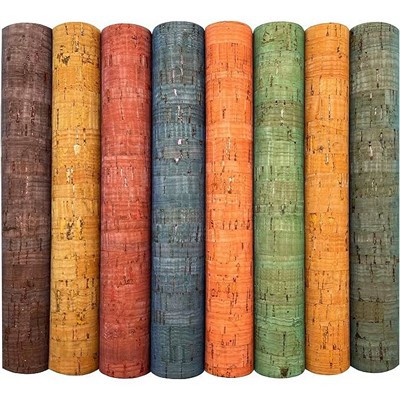
Can cork leather be cut easily?
As a cork leather supplier, I often get asked this question by our customers. Cork leather, a unique and sustainable material, has gained significant popularity in recent years for its use in various products such as shoes, bags, and wallpapers. In this blog post, I'll delve into the factors that affect the ease of cutting cork leather and share some insights based on our experience in the industry.
What is Cork Leather?
Cork leather is a composite material made from cork granules or sheets bonded to a backing material, usually fabric or a synthetic substrate. The cork itself is harvested from the bark of cork oak trees (Quercus suber), which is a renewable and environmentally friendly resource. The process of making cork leather involves several steps, including cleaning, grinding, and bonding the cork to the backing, resulting in a material that combines the natural beauty and properties of cork with the durability and flexibility of a leather - like material.
Factors Affecting the Ease of Cutting Cork Leather
Thickness
One of the most significant factors that influence how easily cork leather can be cut is its thickness. Thinner cork leather, typically in the range of 0.5 - 1.5 mm, is generally easier to cut compared to thicker varieties. Thinner sheets require less force to penetrate and can be cut with a sharp pair of scissors or a craft knife. On the other hand, thicker cork leather, say 2 - 3 mm or more, may need more robust cutting tools such as a rotary cutter or a die - cutting machine. The increased thickness provides more resistance, and the cutting edge needs to be able to slice through a greater volume of material.
Backing Material
The type of backing material used in cork leather also plays a crucial role. If the backing is a lightweight fabric, it will generally not pose much resistance during cutting. Fabrics like cotton or polyester blends can be easily cut along with the cork layer. However, if the backing is a more rigid or synthetic material, it may require different cutting techniques. For example, a backing with a high - density synthetic polymer may dull the cutting blade more quickly and may need a sharper or more specialized tool to achieve a clean cut.
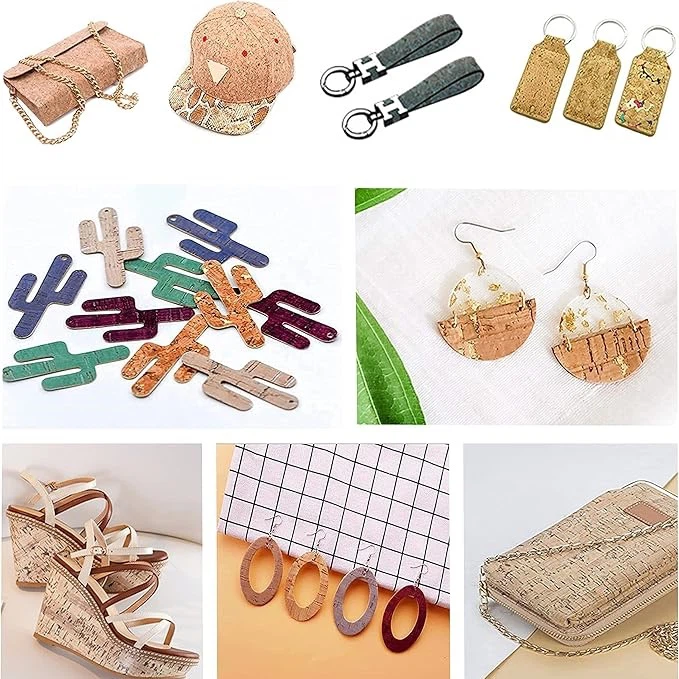

Cutting Tools
The choice of cutting tools is essential for a smooth cutting process. As mentioned earlier, sharp scissors can be used for thin cork leather, especially for small - scale or DIY projects. A craft knife with a replaceable blade is also a popular option, allowing for more precision in cutting complex shapes. For larger - scale production, rotary cutters are often preferred. They can cut through multiple layers of cork leather at once and are designed to make long, straight cuts efficiently. Die - cutting machines are another option for mass production, where a pre - shaped die is used to cut out specific shapes with high precision.
Cork Quality
The quality of the cork itself can impact cutting ease. High - quality cork leather with well - bonded cork granules and a uniform structure is easier to cut than lower - quality products. In lower - quality cork leather, the cork granules may be loosely bonded, and there may be inconsistencies in the material. This can cause the cutting blade to catch or tear the material, resulting in an uneven cut.
Cutting Techniques
When cutting cork leather, there are a few techniques that can make the process easier. First, it's important to ensure that the cutting surface is flat and stable. A cutting mat is ideal as it provides a smooth surface and protects the underlying table. For straight cuts, using a ruler or a straight edge as a guide can help maintain accuracy. When cutting curves or irregular shapes, it's best to make small, incremental cuts rather than trying to cut the entire shape in one go. This gives more control over the blade and reduces the risk of tearing the material.
Real - World Examples
In our experience as a cork leather supplier, we've seen a wide range of cutting scenarios. For instance, a small - scale shoe manufacturer that uses our Factory Customized Nature Cork Synthetic Cork Leather Cork Fabric for Shoes and Bags for their hand - crafted shoes found that using a sharp pair of scissors worked well for cutting the thinner cork leather they used for the shoe linings. However, when they switched to a thicker cork leather for the shoe uppers, they had to invest in a rotary cutter to achieve clean and precise cuts.
A bag manufacturer that sources our Wholesales Portugal Cork Synthetic Leather Natural Cork Textile Cork Fabric for Bag Shoes Wallpaper Women Wallet uses a die - cutting machine for mass production. This allows them to cut out large quantities of identical shapes quickly and efficiently. They've also found that high - quality cork leather reduces the frequency of blade changes and produces a more consistent end product.
Conclusion
In conclusion, whether cork leather can be cut easily depends on several factors, including thickness, backing material, cutting tools, and cork quality. With the right combination of these elements and proper cutting techniques, cork leather can be cut with relative ease, whether for small DIY projects or large - scale industrial production.
If you're interested in purchasing cork leather for your projects, we'd love to hear from you. Our team of experts can provide you with more information about the different types of cork leather we offer, including their thickness, backing materials, and cutting recommendations. Contact us to start a discussion about your specific needs and explore how our cork leather can be the perfect material for your next creation.
References
- "Cork: Properties, Applications and Potential," edited by João P. Sousa and Manuel A. Vaz.
- "Sustainable Materials for the Fashion and Textile Industry," various authors.