In the ever - evolving world of materials science, the search for innovative and sustainable sound - absorbing materials is a continuous journey. As a cork leather supplier, I've witnessed firsthand the growing interest in cork leather and its potential applications. One question that often arises is: Does cork leather make a good sound - absorbing material? In this blog, I'll delve into the science behind sound absorption, explore the properties of cork leather, and evaluate its effectiveness as a sound - absorbing solution.
Understanding Sound Absorption
Before we can assess cork leather's sound - absorbing capabilities, it's essential to understand the concept of sound absorption. Sound is a mechanical wave that travels through air or other mediums. When sound waves encounter a material, several things can happen: they can be reflected, transmitted, or absorbed. A good sound - absorbing material is one that can convert the energy of the sound waves into heat energy, thus reducing the amount of sound that is reflected or transmitted.
The effectiveness of a sound - absorbing material is measured by its sound absorption coefficient (SAC). The SAC ranges from 0 to 1, where 0 means the material reflects all the sound waves (no absorption), and 1 means the material absorbs all the sound waves. Different materials have different SACs depending on their physical properties, such as density, porosity, and thickness.
Properties of Cork Leather
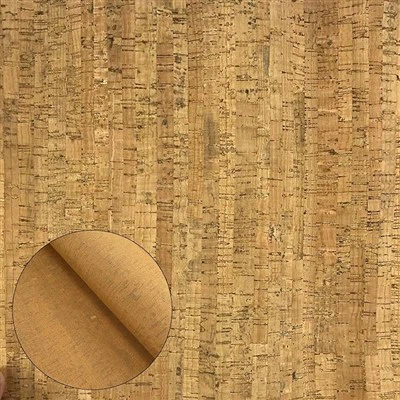
Cork leather is a unique material that combines the natural properties of cork with the durability and flexibility of leather. It is made by bonding a thin layer of cork to a fabric or leather backing. Cork itself is a natural material harvested from the bark of cork oak trees. It has several properties that make it potentially suitable for sound absorption:
Porosity
Cork is a highly porous material. Its cellular structure consists of millions of tiny air - filled cells. These cells act as small resonators that can trap sound waves. When sound waves enter the pores of the cork, they cause the air inside the cells to vibrate. This vibration dissipates the sound energy as heat, resulting in sound absorption.
Lightweight and Flexible
Cork leather is lightweight and flexible, which makes it easy to work with in various applications. It can be cut, shaped, and installed in different spaces without adding excessive weight. This flexibility also allows it to conform to different surfaces, increasing its potential for sound absorption in irregularly shaped areas.
Sustainability
As a natural and renewable material, cork is an environmentally friendly choice. Harvesting cork from cork oak trees does not harm the trees, as the bark regenerates over time. This makes cork leather an attractive option for those looking for sustainable sound - absorbing solutions.
Sound - Absorbing Performance of Cork Leather
To evaluate the sound - absorbing performance of cork leather, we need to look at its SAC. Several studies have been conducted on the sound - absorbing properties of cork, but specific data on cork leather is relatively limited. However, based on the properties of cork and the general principles of sound absorption, we can make some reasonable assumptions.
The porosity of cork leather plays a crucial role in its sound - absorbing ability. The more porous the cork layer, the higher its potential for sound absorption. Additionally, the thickness of the cork leather can also affect its SAC. Thicker cork leather generally has a higher SAC because it provides more material for the sound waves to interact with.
In comparison to other common sound - absorbing materials, such as fiberglass and acoustic foam, cork leather may have a lower SAC in some frequency ranges. Fiberglass and acoustic foam are specifically designed for sound absorption and often have higher SACs across a wide range of frequencies. However, cork leather has some advantages over these materials. For example, it is more aesthetically pleasing and can be used in applications where the appearance of the material is important, such as interior design.
Applications of Cork Leather for Sound Absorption
Due to its unique properties, cork leather can be used in various applications for sound absorption:
Interior Design
Cork leather can be used as wall coverings, ceiling tiles, or partitions in commercial and residential buildings. Its natural look and feel can enhance the aesthetic appeal of a space while reducing noise levels. For example, in a restaurant, cork leather wall panels can absorb the sound of conversations and clattering dishes, creating a more comfortable dining environment.
Automotive Industry
In the automotive industry, cork leather can be used as interior trim to reduce noise from the engine, road, and wind. Its lightweight nature makes it a suitable choice for vehicles, as it does not add significant weight to the car.
Furniture
Cork leather can be used to make furniture, such as chairs and sofas. By incorporating cork leather into the design, the furniture can help absorb sound in a room, making it more acoustically comfortable.
Factory Customized Nature Cork Synthetic Cork Leather Cork Fabric for Shoes and Bags
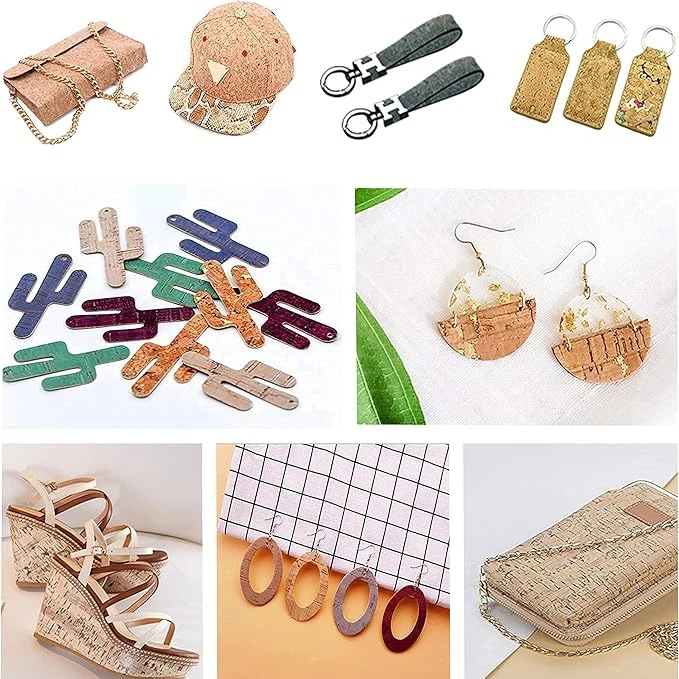
If you are interested in exploring the potential of cork leather for sound absorption or other applications, we offer Factory Customized Nature Cork Synthetic Cork Leather Cork Fabric for Shoes and Bags. Our cork leather products are made with high - quality materials and can be customized to meet your specific needs.
Wholesales Portugal Cork Synthetic Leather Natural Cork Textile Cork Fabric for Bag Shoes Wallpaper Women Wallet
For those looking to purchase cork leather in bulk, we also provide Wholesales Portugal Cork Synthetic Leather Natural Cork Textile Cork Fabric for Bag Shoes Wallpaper Women Wallet. Our wholesale options are suitable for manufacturers, designers, and businesses that require large quantities of cork leather.

Conclusion
In conclusion, cork leather has the potential to be a good sound - absorbing material. Its porosity, lightweight, flexibility, and sustainability make it an attractive option for various applications. While its sound - absorbing performance may not be as high as some specialized acoustic materials in all frequency ranges, it offers unique advantages in terms of aesthetics and environmental friendliness.
If you are considering using cork leather for sound absorption or have any questions about our cork leather products, please feel free to contact us. We are happy to discuss your specific requirements and provide you with more information on how cork leather can meet your needs. Whether you are an interior designer, an automotive manufacturer, or a furniture maker, cork leather could be the solution you've been looking for.
References
- Berardi, U., Iannace, S., & Del Buono, G. (2012). A review of traditional and non - traditional natural fibres used in composite materials. Construction and Building Materials, 31, 466 - 483.
- da Silva, A. M., & Pereira, H. (2009). Cork: properties, capabilities and applications. In Wood and Natural Fibre Composites (pp. 131 - 150). Springer, Dordrecht.
- Oladipo, O. S., & Olorunnisola, O. O. (2017). Acoustic properties of natural fibre reinforced composites: A review. Journal of King Saud University - Engineering Sciences, 29(2), 115 - 122.